
Distillate colour and isolate purity: how to read an extract with your eyes.
Before any lab report comes back, an experienced buyer has already judged an extract the same way you judge honey or olive oil — by looking at it. Colour is the one quality signal that needs no instrument, and it is remarkably honest. Here is what distillate colour actually tells you, why some oil runs dark, what 99.9% isolate purity means, and the questions that separate a real extraction partner from a reseller.
What is cannabis distillate?
Distillate is a highly refined cannabis extract: crude oil that has been cleaned up and then distilled so the cannabinoids — THC, CBD, or both — are concentrated to high potency while most of everything else is removed. It is the workhorse ingredient of the legal market, the input behind most vapes, softgels, edibles and tinctures, because it is potent, consistent and easy to formulate with. (If you're newer to the supply chain, start with what cannabis tolling is — this article picks up where extraction begins.)
How is distillate made?
1. Extraction. Solvent (commonly ethanol or CO₂) pulls cannabinoids, terpenes, waxes and pigments out of the biomass, producing a thick, dark crude oil. Everything the plant had to offer — wanted and unwanted — comes along.
2. Winterization and de-waxing. The crude is chilled so fats and waxes solidify and can be filtered out. Skip or rush this step and the waxes stay behind to cloud the oil and gum up everything downstream.
3. Decarboxylation. Heat converts the acid forms of the cannabinoids (THCA, CBDA) into their active forms (THC, CBD).
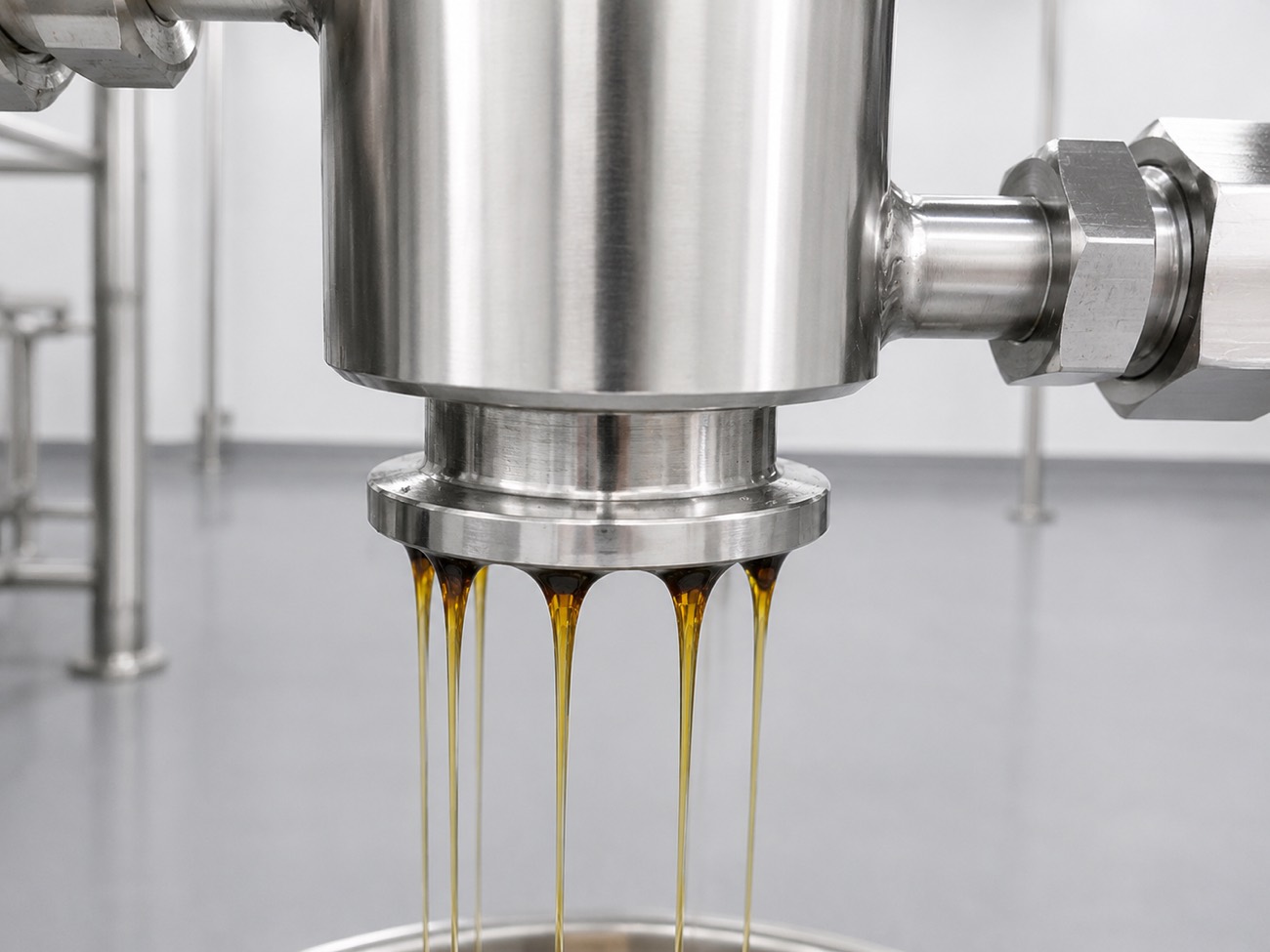
4. Distillation. Under deep vacuum, thin-film or short-path distillation separates the cannabinoids from remaining impurities by boiling point. Done well, what comes off the condenser is a clear, viscous, golden oil.
5. Colour remediation. The optional step that separates extractors. Residual pigments and oxidation colour can be stripped from the oil — but aggressive remediation costs yield, so many labs simply don't do it, and the colour stays. This is where Lupos's proprietary de-waxing and colour-removal process earns its keep: it strips waxes and dark colour without sacrificing yield.
Why is some distillate dark?
Fresh, well-made distillate is gold. When it runs amber, red or brown instead, the colour is carrying information:
Plant pigments that survived. Chlorophyll and other pigments extracted from the biomass that were never fully removed. Waxes and lipids. Incomplete winterization leaves fats that haze and darken the oil. Heat and oxidation. Cannabinoids and residual compounds degrade with heat, air and time, and the degradation products are dark — an oil that ran too hot, sat too long, or was distilled on tired equipment shows it. Lot-variable biomass. Every lot of input material is different; without a remediation step that brings each batch back to the same standard, the colour drifts lot to lot.
None of this necessarily makes a dark oil non-compliant — it can still pass potency testing. But colour drift tells you the process upstream isn't holding a constant standard, and the same drift will show up in your finished product.
What colour should good distillate be?
The industry sells distillate across a wide colour range — pale yellow through amber, even rose — and prices it mostly on potency. We think that misses the point. Colour is the visible record of how the oil was made, so we treat it as part of the specification: Lupos distillate is ultra-gold — clear, bright, and consistent batch to batch — because the de-waxing and colour-removal step is built into the process, not bolted on when a buyer complains. A formulator working with ultra-gold oil gets a finished product that looks the same in January as it did in June; a formulator working with drifting amber has to hide it.
What is CBD isolate — and CBG isolate?
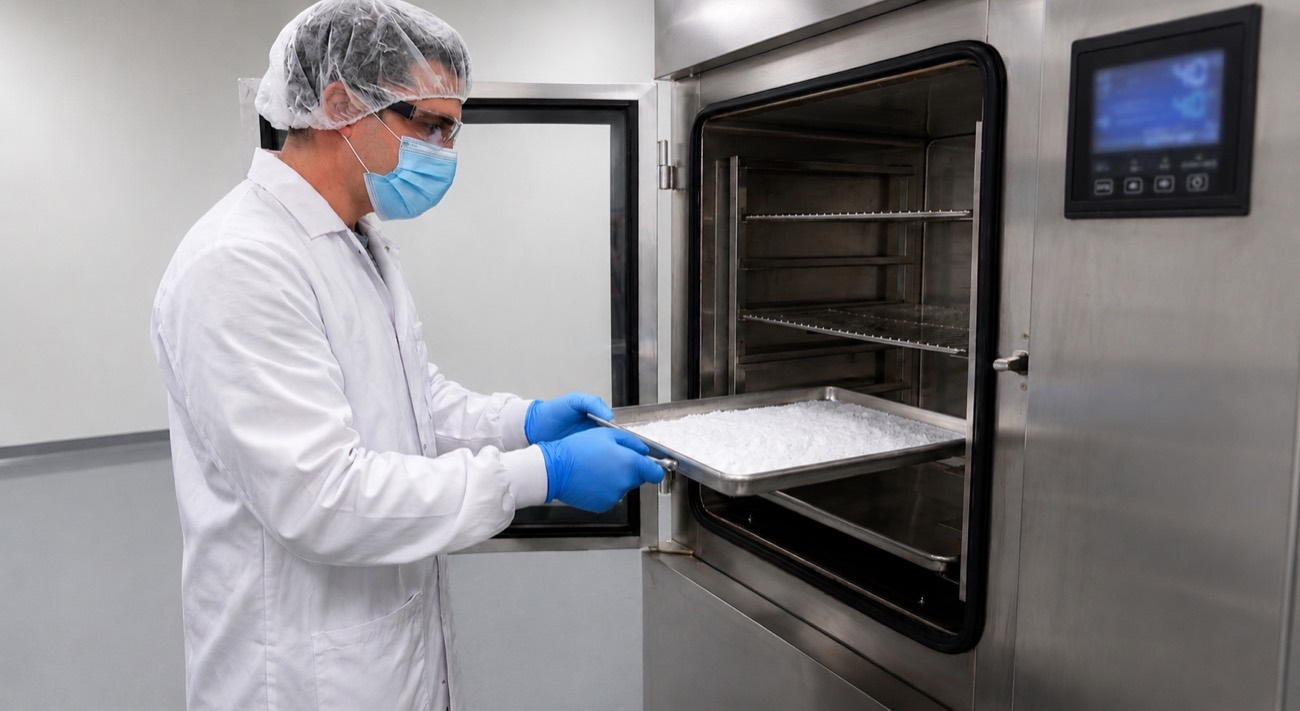
Isolate goes one refinement further than distillate: a single cannabinoid, crystallized out and purified until virtually nothing else remains. The result is a white crystalline powder — CBD isolate and CBG isolate being the two most commercially important. Because it is one molecule, isolate is odourless in formulation, precisely doseable by weight, and the cleanest route to THC-free product claims — there is no THC in it to manage.
What does 99.9% purity actually mean?
Purity is measured by lab assay and stated on the certificate of analysis: a 99.9% isolate is 99.9% the named cannabinoid by mass. The number worth understanding is the last fraction of a percent. Getting from crude to 99% is process; getting from 99% to 99.9% is discipline — repeated purification that removes the final residues of everything else. And you can see the difference: at 99.9%, isolate is a true white. Off-white, cream or grey powder is telling you the impurities are still in there — colour is the purity test you can run with your eyes, and the COA should simply confirm what you saw. Lupos CBD and CBG isolate is produced at 99.9% purity, white, with a COA on every lot.
Does extract colour matter in the finished product?
More than most buyers expect. A softgel shell is translucent — the capsule shows whatever is inside it, so drifting distillate colour becomes drifting shelf colour. A vape cartridge displays the oil through glass at retail. A tincture shows its colour in the dropper every morning. In every format, the consumer reads dark or inconsistent colour as a quality problem — whether or not the COA agrees. Consistent inputs are the only fix: start gold, stay gold.
Distillate or isolate: which input should you buy?
Choose distillate when you want potent, formulation-ready oil at the best cost per milligram — vapes, softgels, edibles, tinctures. Choose isolate when you need THC-free claims, precise single-cannabinoid dosing, or a neutral input that adds no taste or colour of its own. Many programs use both: distillate for the flagship line, isolate for the THC-free and CBG products beside it.
Buying bulk extract in Canada: what to check
Ask for the COA on the actual lot you're buying, not a representative one. Confirm the seller holds a processing licence under the Cannabis Act and check their Health Canada audit history. Ask how colour is controlled — specifically whether remediation is a standard step or an upcharge — and what the colour spec is, batch to batch. If you export, ask whose regulators their documentation has already cleared. And ask the minimum: many extractors only sell by the multi-kilogram lot. Lupos sells bulk crude, ultra-gold distillate and 99.9% CBD/CBG isolate at any quantity — no minimum order — with a COA on every lot and export documentation proven as far as Australia.
What to ask an extraction partner
Whether you're tolling your own biomass or buying finished extract, the same questions apply. What's the colour spec, and how is it held? How is de-waxing handled, and what does remediation cost in yield? Who runs the analytical bench? (At Lupos: a team led by a PhD analytical chemist, 6 PhDs on staff.) What's the audit history, and will they share it during scoping? And does the lab run its own products through the same line? (We do — PROOFLY, referenced as Canada's #1 cannabis wellness brand, is made on the same standard.)
Start this project
Buying bulk distillate or isolate, or weighing a tolling program? A real person follows up, not a bot. Email info@lupos.ca or start a project at lupos.ca.
See tolling, distillates & isolates →
Related services & reading
Tolling, Distillates & Isolates · Softgel Contract Manufacturing · Packaging & Distribution
What is cannabis tolling? · How softgels are made · All resources