
Cannabis packaging and distribution in Canada: the rules, the stamps, and the shelf.
In most industries, packaging is where the brand gets loud and distribution is a phone call. In Canadian cannabis, packaging is regulated down to the finish on the bottle, and distribution runs through a different government buyer in every province. Here is why the packages look the way they do, what the excise stamp actually is, and how a product really gets from a manufacturing line to a legal shelf.
Why does cannabis packaging look so plain?
Because the law designed it that way. Canada's plain-packaging rules require a single uniform colour with no gloss, metallic, fluorescent or embossed finishes, strict limits on logos and brand elements, and nothing that could appeal to youth. The container can't even clash with its mandatory marks: the colour must contrast with the yellow health warning and the red cannabis symbol. For brands arriving from cosmetics or wellness, this is the first shock — almost every tool of shelf design is off the table. What's left to compete on is the product itself, the brand name, and the channel strategy.
The two marks on every package
Two symbols do the talking on a Canadian cannabis package. The standardized cannabis symbol — the red octagon with the leaf — must appear on any product containing THC, at a minimum size of 1.27 cm × 1.27 cm on the principal display panel. Beside it sits the yellow health warning message, drawn from Health Canada's rotating list. Both have prescribed sizes, placements and clear space; neither can be shrunk, restyled or hidden. Layout in this category starts from the marks and works outward.
Why is the container child-resistant?
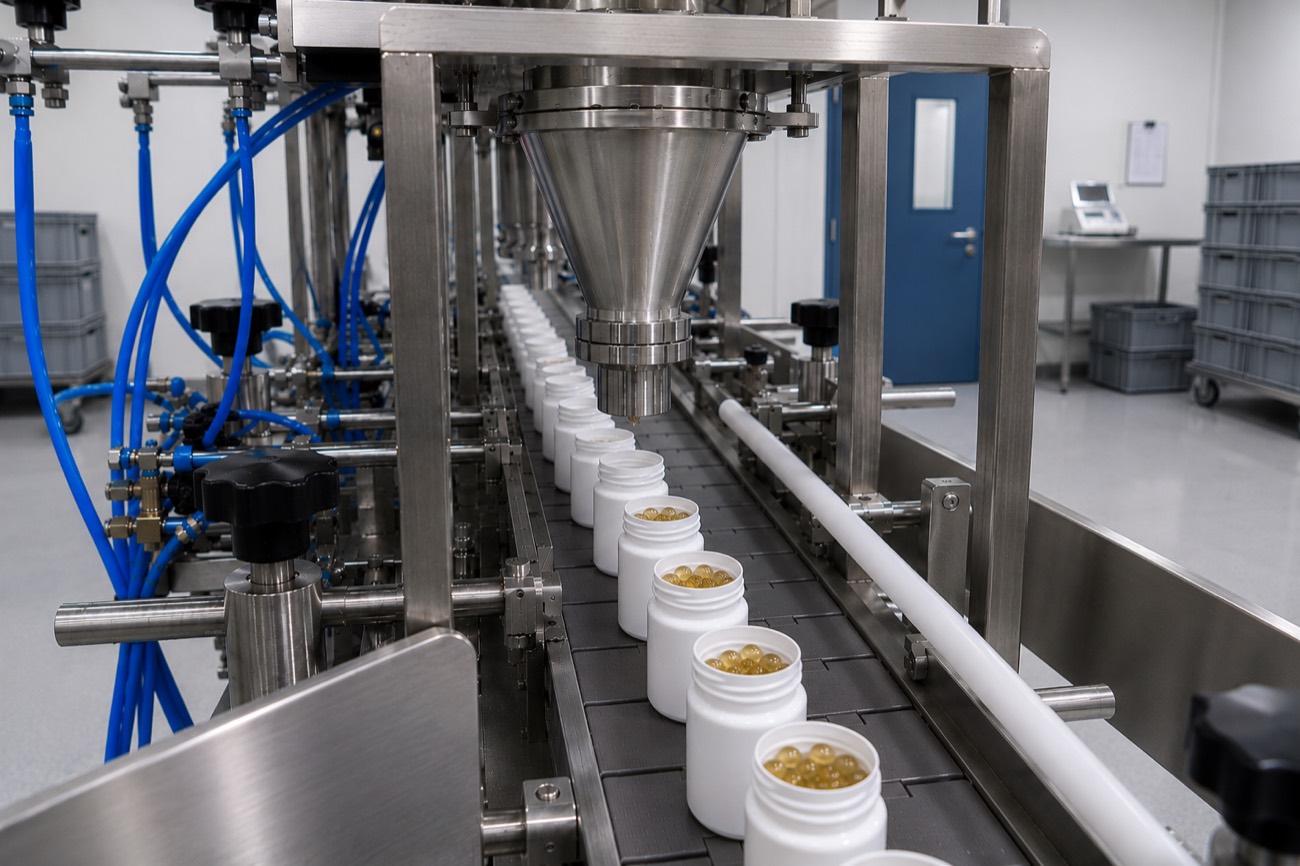
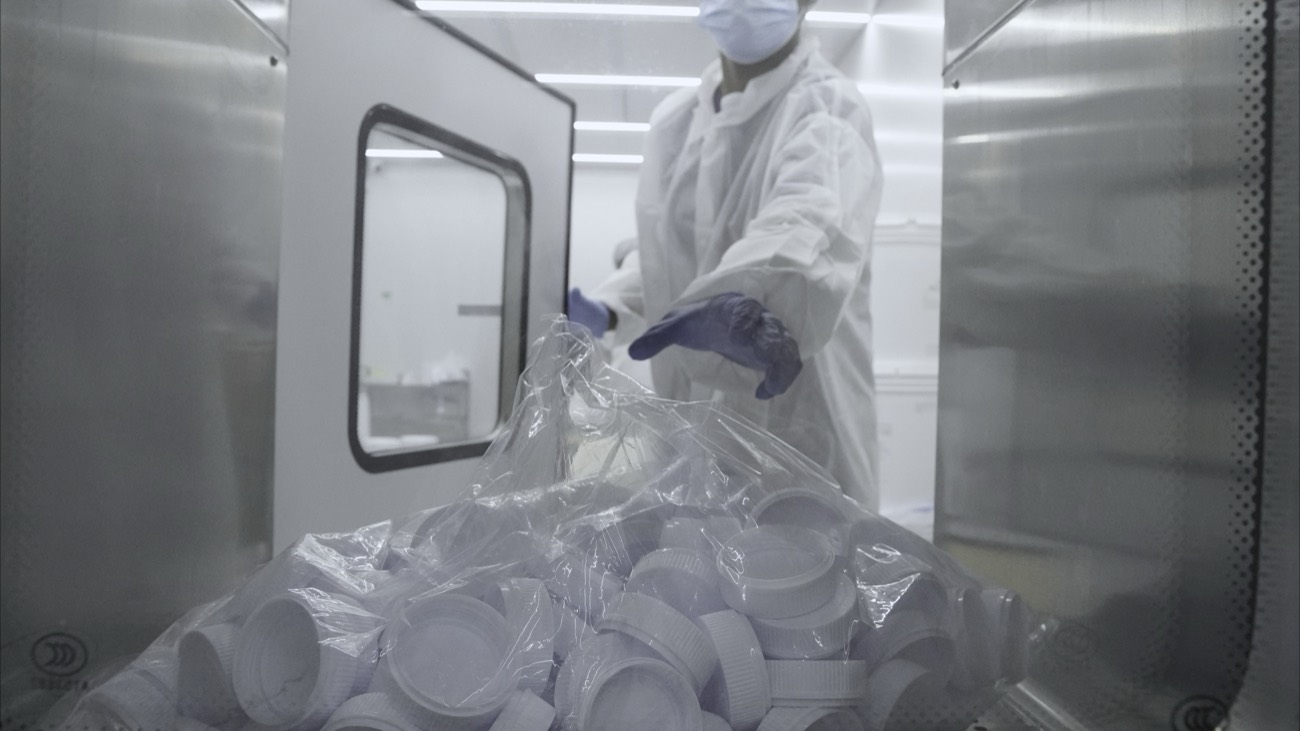
Nearly every cannabis product class must ship in a child-resistant container meeting the same standard used for medicines under the Food and Drug Regulations. For a co-packer this is a components problem as much as a compliance one: caps, closures and liners have to be certified, sourced reliably, and run correctly at line speed — a child-resistant cap applied with the wrong torque isn't child-resistant.
What is the cannabis excise stamp?
The small banded sticker sealing every THC product is a federal excise stamp — proof the duty was paid, administered by the CRA. Three things about it surprise newcomers. First, it's jurisdiction-specific: each province and territory has its own colour-coded stamp, so a product bound for Ontario carries a different stamp than the identical product bound for Alberta. Second, each stamp carries a unique alphanumeric identifier and security features like a banknote. Third, only a processing licence holder may apply it. Sell nationally and you're managing a matrix of stamp inventories — ordered in advance, stored securely, reconciled, and applied accurately at line speed. Stamp logistics are a real operational discipline, and getting them wrong stops shipments.
The label is a legal document
A cannabis label is closer to a regulatory filing than an ad: bilingual text, THC and CBD declarations in the prescribed format, lot code, packaged-on date, licence-holder name and contact, warnings, symbol, net quantity — each with rules about size and placement. The consequence of an error isn't a reprint; it's relabelling or recalling finished, stamped, duty-paid product. A competent co-packer treats label review like a batch record — verified against the regulations before the first bottle is filled, not after the first complaint.
What does a co-packing line actually do?
The unglamorous physics of packaging: filling accurately (a net-weight tolerance applies to the package, too), capping with correct torque, labelling straight and in register, applying the right province's stamp, and changing over between products without cross-contamination or mixed components. Automation is what makes this economical — Lupos runs an automated line for round bottles and caps handling softgels, capsules, oils, creams, balms and salves from runs of 2,500 bottles — but automation only pays when the line is run by people who catch the wrong-stamp, wrong-label, wrong-lid failures before they happen at speed.
How does cannabis distribution work in Canada?
There is no national cannabis retailer. Recreational cannabis is bought by each province's board or commission — the OCS in Ontario, AGLC in Alberta, BCLDB in British Columbia, and their counterparts across the country — each with its own product calls, listing requirements, data expectations and review timelines. The medical channel runs separately again, through licensed medical sellers. Selling nationally doesn't mean winning one listing; it means winning the same fight ten times, with ten different scorecards.
Why listing is the real bottleneck
Brands routinely discover that making the product was the easy half. Provincial boards buy from licence holders, on their own calendars, against their own category strategies — and a finished, compliant, beautifully made product with no listing sits in a warehouse. This is the gap most contract manufacturers can't close: they stop at the loading dock. The questions that matter when you pick a packaging partner are about what happens after the dock: who carries the listing, in which provinces, and on whose track record?
What about the medical channel?
Running parallel to the provincial boards is a channel most brands overlook: medical. Canada has about 160,000 patients registered with federally licensed medical sellers (Health Canada, March 2025) — a number that stabilized in 2025 after years of decline, with Ontario accounting for roughly half. The channel works nothing like retail. There are no storefronts; patients order from licensed sellers and product ships to their door. That means there is no walk-by discovery and no budtender recommendation — a brand is either listed on a seller's platform or it is invisible to every patient on it.
The structure is also what makes it valuable. Medical patients buy on a schedule, stay with products that work for them, and read documentation more carefully than any recreational shopper — a loyal, repeat-purchase audience that most recreational brands never touch. The challenge is the door: each medical seller curates its own menu, so winning the channel means winning placement seller by seller, relationship by relationship. This is precisely where manufacturing-only partners stop and where Lupos keeps going — PROOFLY sells through 15+ medical partners, and those same relationships can carry a client's brand.
The bigger opportunity: the world is buying Canadian
The fastest-growing cannabis market Canada serves isn't in Canada. Canadian medical cannabis exports passed 275 tonnes in 2025 — a 143% jump, more than double the year before. Germany, after its 2024 reforms, became the largest medical cannabis import market in the world, and Canada is its top supplier. Australian imports of Canadian product roughly tripled between 2024 and 2026. For a Canadian brand or LP, export is the genuine growth story of this decade.
It is also the most demanding channel in the industry: import and export permits, destination-regulator documentation, pharmaceutical-grade (GDP) logistics, and months from production to foreign shelf. Rising volumes are compressing prices too, which rewards exactly one thing — differentiated, documented quality over commodity bulk. Lupos already exports to Australia, with documentation that has cleared a foreign regulator, and our euGMP certification is in progress — the credential European medical markets require.
Distribution as a growth lever
This is where Lupos is built differently. We sell our own brand — PROOFLY, referenced as Canada's #1 cannabis wellness brand — through 10 provincial boards and 15+ medical partners, and we can list your brand through the same channels. Packaging with us isn't only a cost decision; it's a route to shelves you don't currently have, in provinces you haven't entered, through relationships that already exist. Most co-packers cut your landed cost. Ours can also grow your revenue. This service is for existing brands with a manufactured product — if that's you, the shelf is closer than you think.
Start this project
Need compliant packaging, provincial listings, or both? A real person follows up, not a bot. Email info@lupos.ca or start a project at lupos.ca.
See packaging & distribution →
Related services & reading
Packaging & Distribution · Softgel Contract Manufacturing · Topicals & Oils Manufacturing
How to launch a cannabis topical in Canada · How softgels are made · All resources